
Life expectancy
Life expectancy at birth in England has generally increased over many decades, however, there have been two turning points in trends in life expectancy in England in the past decade. From 2011 increases in life expectancy slowed after decades of steady improvement. Then in 2020, the Covid-19 pandemic was a more significant turning point, causing a sharp fall in life expectancy.
Average life expectancy at birth in North Tyneside over the last decade for both males and females has stalled this is similar to the trend across England.Source: OHID Fingertips January 2026
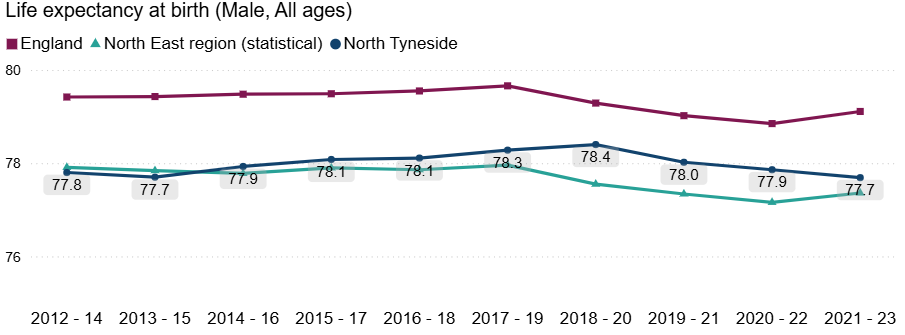
For males it is currently 77.7 years which is higher than the average for the North East (second best in the region after Northumberland) but is significantly lower (1.4 years) than that for England.
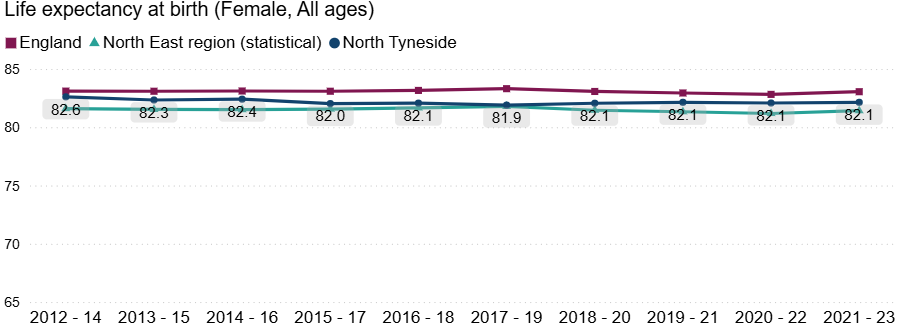
For females is currently 82.1 years. This is better than the North East average (second best in the region after Northumberland) but is 0.9 years lower than the average for England.
Life expectancy is closely related to the overall level of deprivation in an area. People living in less deprived areas live significantly longer than people living in deprived areas. There is a social gradient to health.