
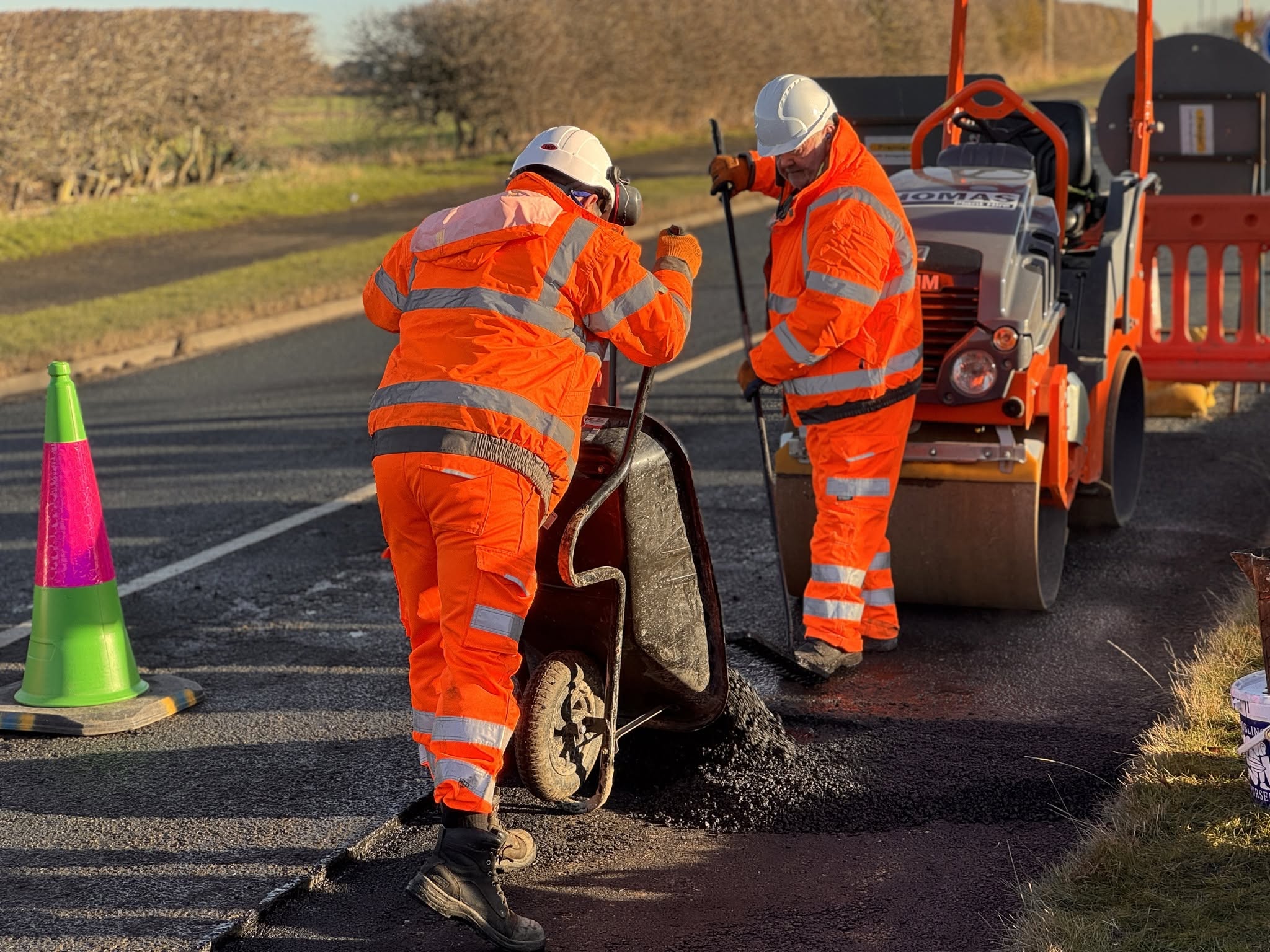
As part of the work to improve road safety and driving conditions, North Tyneside Council is carrying out surface dressing works on the A189, A186, A193 and A1148 from 29 June 2026.
Surface dressing is due to take place across routes from the western edge of the borough to the coast, as part of annual investment in roads and transport.
Works are due to begin on the A189 from Salters Lane on 29 June and will progress in three stages, with the A186, A193 and A1148 also scheduled for repairs.
The phases of works include civils and patching operations, surface dressing, and lockchip treatments to extend the life of the carriageway.
Each phase of work is expected to occur over a period of one or two days at each location, with all works scheduled to conclude in late August.
Details of the impacted sections and duration of works on each road can be viewed via Google map. Motorists are advised that temporary traffic management, which may include lane or road closures and diversions, will be in place during the works. Drivers are advised to follow on-site signage which will be erected prior to the works taking place.
Civils and patching works will be carried out between the hours of 6pm and midnight on 29 and 30 June, 1, 2, 6 and 7 July. Surface dressing and lockchip works will be carried out between 8am and 5pm on 6, 7, 10, 11, 12, 13, 17, 18, 19, 20, 21 and 24 August, weather permitting. Road markings will be reinstated approximately one to two weeks after the lockchip phase.
Councillor Hannah Johnson, Cabinet Member responsible for Neighbourhoods at North Tyneside Council said: “This programme of works is a vital investment in North Tyneside’s transport infrastructure, which will help our roads remain safe, resilient and fit for the future.
“Preventative treatments like surface dressing allow us to extend the life of our roads and minimise the need for more disruptive repairs later down the line.
“We are constantly striving to improve and maintain conditions for road users, and appreciate their patience while work is undertaken.”
During the process of surface dressing, a layer of hot bitumen is sprayed onto the road surface, and small stone chippings are spread on top; heavy duty rollers are then used to compress the chippings flat into the bitumen. This process protects the road surface from excessive force, increasing its life span and improving grip for vehicles. Prior to the lockchip phase of works, there may be loose chippings on the road surface; this is a normal and important part of the process. Traffic helps to press the chippings into the surface, ensuring full coverage and proper bonding. The roads will be swept for excess chippings as their surfaces become more stable.